

What is Blind Spot and How can you Avoid it?
Written by Uzair IskandarThe Importance Of Knowing What Is A Blind Spot
When a new driver is learning the craft, they often hear the term ‘blind spots’. However, many rarely understand what it means until it is too late. Meanwhile, experienced drivers are not immune to it either. Once complacency takes root, these drivers begin to rely solely on mirrors, a dangerous habit. That’s why knowing the answer to the “What is a blind spot?” question is incredibly important for every driver.
What is the Blind Spot in a Car?
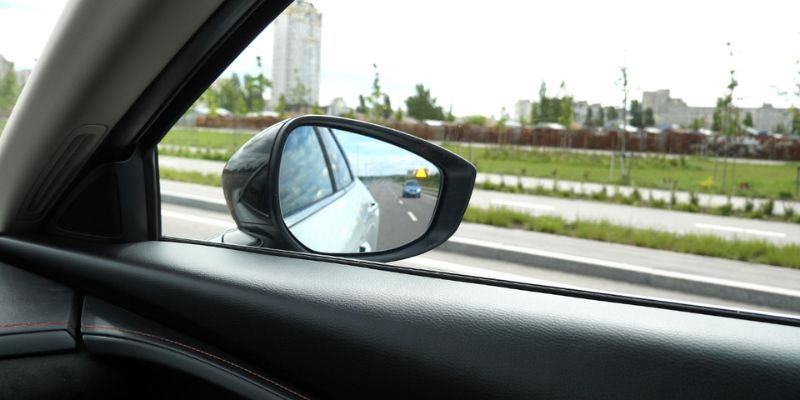
When sitting in the driver’s seat, vision is impaired. The windshield provides a view forward, whilst mirrors are designed to cover the areas directly behind the vehicle. Yet, there exists a gap. The answer to the question What is a blind spot?’ lies in the overlapping of these views. Typically, a car’s hidden spaces lie in the rear quarters of the vehicle.
- Left Rear Quarter: The area extending from about the middle of the driver’s side door, angling out and back. Additionally, as a car passes by, it will eventually disappear from the peripheral vision and the side mirror. That happens before it appears in front of the windshield.
- Right Rear Quarter: This is often a larger blind spot for drivers in left-hand-drive countries. By sitting on the left side of the car, the passenger side is farther away. That’s why a car can sit in this zone, completely invisible to mirrors, for a longer period.
Types Of Blind Spots
Now that we know what they are, let’s move forward to identifying them. While the traditional explanations focus on the two rear quarters, the reality today is different. Modern vehicles have several significant hidden zones that a driver must pay attention to at all times.
- The Traditional Side Spots: As noted earlier, these refer to the two primary zones on either side of the vehicle. Moreover, they are roughly parallel to the rear doors and extend diagonally backwards. Thus, they are most dangerous during lane changes.
- The Front Spots (The A-Pillars): The vertical supports on either side of the windshield, A-pillars, are essential for the structural integrity of a car. They protect the vehicle’s occupants in the event of a rollover. However, they also act as a significant obstacle to the driver’s vision. At a stop sign or a roundabout, a pedestrian, cyclist, or even another vehicle can be completely hidden behind them. That is why it is crucial to physically move the head forward and back when checking at intersections.
- The Rear Spots: The rearview mirrors show the view straight out the back window. However, it can not show the area directly behind the bumper. Thereby, creating a massive hidden zone – particularly for taller vehicles like SUVs and trucks. Moreover, a small child, a pet, or low-lying objects like fire hydrants are not visible from the driver’s seat. Thus, many regulatory authorities now require backup cameras to avoid accidents.
- Cargo-Induced Spots: When hauling a trailer, carrying bicycles on a roof rack, or a trunk full of luggage, new hidden spaces appear. Hence, special care should be taken when transporting cargo. If done poorly, it may obstruct side views altogether.
How to Avoid Them
Now that we know what they are and where they might occur, we can address them appropriately. Moreover, the key here is to learn how deal with them whilst driving. To do that, a driver needs a combination of proper mirror technique, physical movement, and advanced technology.
- The Proper Mirror Adjustment Method:
Many drivers set their mirrors to see the side of their own car. However, that is the wrong way to go about it. Instead, use the following method:- Side Mirrors: The driver should lean their head to the left until it touches the driver’s window. From this position, adjust the left side mirror, ensuring that the driver just barely sees the rear fender of your car. Then, lean to the right toward the center of the car and adjust the right mirror accordingly. This angles the mirrors outward, thereby covering the road next to the driver rather than the side of the car.
- Rearview Mirror: This should be set to provide drivers with a clear, straight view out the rear windshield.
- The Shoulder Check or Head Turn: Even with perfect mirror alignment, the danger remains. That’s why, to cover all hidden spaces completely, use physical checks as well. Before changing lanes or merging, do the following:
- Check your rearview mirror.
- Check your side mirror.
- Turn your head and look over your shoulder toward the blind spot.
Conclusion
All in all, the answer to the ‘What is a blind spot?’ question holds tremendous value for drivers. By knowing where the problem may likely occur, they are equipped to deal with it effectively and promptly. However, a refusal to change ways may lead to devastating consequences. Hence, it is better to adopt these measures to prevent any disaster from occurring in the first place.