

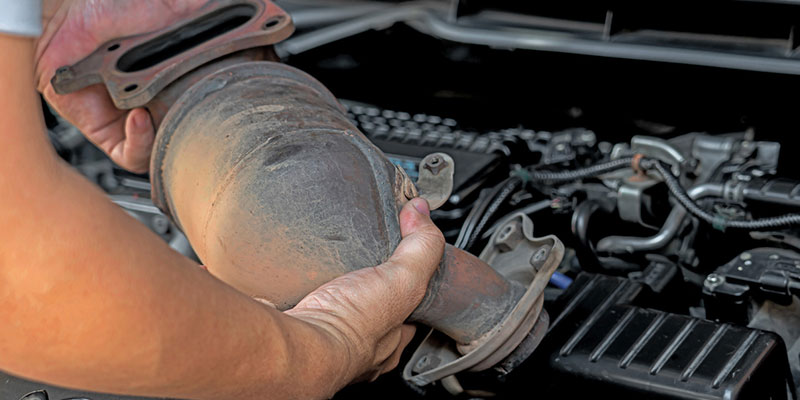
What is Car Catalytic Converter and what does it do?
Written by Abrar FazlaniYou’ve probably never thought much about what happens after you press the gas pedal in your Toyota. Sure, the engine starts, but something interesting works behind the scenes. Hidden under your conveyance is a car catalytic converter. This small device quietly changes dangerous exhaust gases into safer ones. Most drivers cruise through Karachi’s busy roads without knowing that this part prevents tons of toxic pollution every single day.
However, when this part fails, your car starts pumping harmful chemicals into the air we all breathe. Learning how your car catalytic converter works helps protect your family’s health and saves money on repairs.
What is a Car Catalytic Converter?
Looks like a small metal canister that sits along your vehicle’s exhaust system. However, its appearance doesn’t reveal the sophisticated technology hidden inside this remarkable device.
Inside the converter, you’ll find a structure that looks like a honeycomb. This structure features a coating of precious metals, including platinum, palladium, and rhodium. Additionally, this automobile’s part utilizes these metals to initiate reactions. These reactions break down toxic gases.
How Does a Converter Reduce Toxicity of Emissions?
When the engine runs, it makes three main types of harmful gases. These are carbon monoxide, nitrogen oxides, and unburned fuel particles. These gases pose serious threats to human health and our environment.
Why Do Modern Cars Need These Converters?
Back in the 1970s, air pollution from cars reached scary levels in major cities worldwide. Environmental rules then required that all new cars must have emission control systems. As a result, it became required by law for most cars.
Signs Your Converter Might Need Help
Several warning signs show potential problems with your car’s catalytic converter. First, you might notice reduced engine power or slow acceleration during your daily drive.
Common Problems That Affect Converters
Carbon Buildup and Clogging
Over time, carbon deposits can clog the internal honeycomb structure of your automobile’s catalytic converter. Also, contamination from oil leaks or coolant problems can damage the precious metal coating. This buildup blocks exhaust flow and reduces the converter’s ability to process harmful gases well.
Overheating Problems
Overheating is another serious threat to converter life. This usually happens when unburned fuel enters the system due to engine misfires or bad spark plugs. As a result, too much heat can permanently damage the internal structure and melt the precious metal parts.
Physical Damage from Road Hazards
Physical damage from road debris, speed bumps, or hitting the ground can crack its housing. Likewise, these external hits can mess up the internal honeycomb structure and reduce how well it works. Even small cracks can let untreated exhaust gases escape before proper cleaning.
Taking Care of Your Converter
Regular care helps extend this part’s life significantly. First, use good-quality fuel to reduce carbon buildup inside the system.
Moreover, fix engine problems quickly to prevent unburned fuel from reaching the converter. Plus, regular oil changes prevent contamination that could damage the precious metal parts.
Taking longer highway drives can sometimes help your converter reach its optimal operating temperature. So, mix short city trips with longer journeys when possible to keep your converter healthy.
Replacement Costs and Things to Consider
Replacing a broken automobile catalytic converter can be expensive due to the precious metals involved. Prices usually range from several hundred to thousands of dollars. This depends on your specific Toyota model.
However, driving with a damaged converter isn’t just illegal in many areas. It even adds to environmental pollution. Plus, your car will fail the emission tests required for registration renewal.
Consider professional cleaning services as a less expensive option for minor clogs. Likewise, some fuel additives can help keep your converter clean between services.
Environmental Impact and Future Changes
This small part of your automobile plays a big role in reducing car pollution worldwide. Statistics show that modern converters reduce harmful emissions by up to 90% compared to engines without them.
Furthermore, ongoing research continues to improve converter efficiency and durability. New materials and designs promise even better performance in future Toyota models.
Understanding its importance helps you appreciate its role in protecting air quality for future generations. So, proper maintenance becomes an environmental duty, not just a mechanical need.