

Different Types of Transmissions: A Comprehensive Guide
Written by Moosa RazaUnderstanding The Types Of Transmission
Traditionally, drivers were faced with a simple dilemma. Whether to buy a manual or an automatic vehicle. However, the landscape today is vastly different from what it was. Automotive engineering has evolved dramatically, including the transmission, which transfers power from the engine to the wheels. Now, it is available in different forms. Each of which comes with its own philosophy, driving characteristics, and mechanical intricacies.
That’s why understanding the different types of transmission is crucial for both experienced and new drivers. Whether it is drivers or auto-enthusiasts, a deep knowledge of the mechanism helps with many details. These include fuel efficiency, performance, and even its long-term maintenance costs. Furthermore, it helps people understand what they are better suited for and make decisions accordingly.
What is a Transmission?
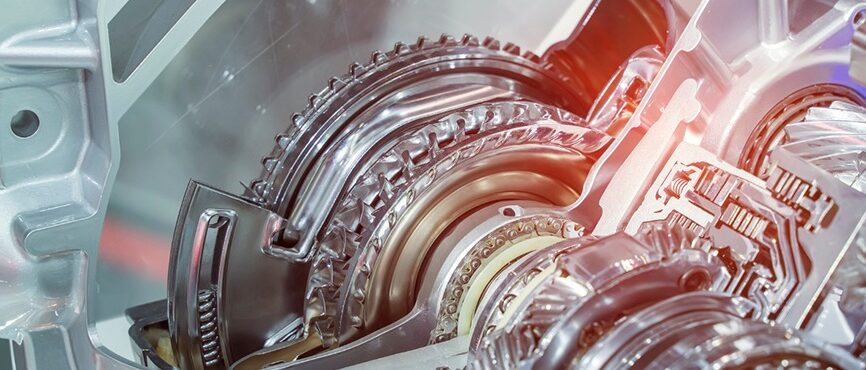
Before we dive into the specifics of different types of transmission, let’s first establish the fundamentals. First, it is necessary to understand what exactly they do. To put it simply, the engine produces power. However, it can only do so efficiently within a narrow range of revolutions per minute (RPM). This is where transmissions come in. They act as a mediator. Moreover, they use a system of gears to multiply the engine’s torque to get the car moving. Then, they shift to taller gears to keep the engine running efficiently at highway speeds.
In essence, they ensure that the engine delivers the right amount of power to the wheels for any given situation. Whether it is accelerating from a stop, climbing or cruising on the highway, the transmission plays a key role.
Types Of Transmissions
Now that we understand what it is, let’s look at different types of transmissions. Once a person is aware of the most prominent ones, they can make informed decisions.
1. Manual Transmission (MT): These are often referred to as ‘stick shift’ or ‘standard transmissions’. In other words, they are the manual transmissions that require the most driver involvement. Furthermore, it is the oldest type of transmission.
- How It Works: These manual transmissions require a driver to manually select and engage the gears using a gear lever and a clutch pedal. The clutch temporarily disconnects the engine from the transmission. This allows the driver to move the gear lever. Additionally, it slides a collar from one gear to another to change the gear ratio.
- Pros: Manuals are typically less expensive to buy and repair than automatics. Moreover, they offer drivers maximum control. Hence, their popularity among driving enthusiasts. Furthermore, older models can be more fuel-efficient. That said, modern automatics have largely caught up.
- Cons: On the other hand, they require physical effort and skill to operate. Consequently, tiring the driver both physically and mentally. This holds particularly true for heavy stop-and-go traffic. Moreover, the learning curve can be steep for new drivers. Lastly, the pool of cars with manual transmissions is shrinking rapidly.
2. Automatic Transmission (AT): In direct contrast to MT, this type of transmission automates much of the process. For decades, it was the standard alternative to the manual.
- How It Works: Unlike a manual transmission, a traditional automatic does all the shifting for the driver. It uses a complex device called a torque converter (instead of a clutch) to connect the engine to the transmission. Furthermore, the torque converter uses fluid coupling to transfer power. That is why drivers might feel a slight delay or ‘slushiness’ compared to a manual. Additionally, this type of transmission uses a complex set of planetary gearsets and hydraulic pressure. These help to automatically shift to the appropriate gear based on speed and load.
- Pros: The primary benefit of this type of transmission is the ease of use it provides to drivers. All they need to do is put the gear stick in “Drive” and go. Hence, making it easy to navigate through congested cities for daily commuters. Additionally, they provide a smooth, effortless driving experience.
- Cons: Traditional automatics are often less fuel-efficient than manuals or newer automated types. The primary reason is parasitic power loss in the torque converter. Furthermore, they are also mechanically complex, which can lead to higher repair costs.
3. Automated Manual Transmission (AMT): It is a clever hybrid that bridges the gap between the previous two transmission types.
- How It Works: Mechanically, an AMT is essentially a manual transmission. However, it uses hydraulic actuators and computers to handle the clutch and gear shifts automatically. Moreover, there is no clutch pedal inside the car. Thus, the driver can either leave it in full-auto mode or shift gears manually using paddles or the gear lever. Thereby, driving the vehicle without needing to work a clutch.
- Pros: AMTs are generally more fuel-efficient than traditional automatics due to their manual gearbox. Additionally, they are also cheaper for manufacturers to produce. Thereby, making them more affordable.
- Cons: The biggest drawback of this type of transmission remains the driving experience. Early AMTs, and even some modern ones, can be jerky and hesitant. Furthermore, there are noticeable lurches between gears.
4. Continuously Variable Transmission (CVT): A radically different approach to gearing, it has attracted many admirers. It is popular in fuel-efficient cars, particularly hybrids and compact vehicles.
- How It Works: It does not use a fixed set of gears (like a 6-speed or 8-speed). Instead, it uses a CVT, which consists of two pulleys connected by a steel belt or chain. The pulleys can change their diameter continuously. When accelerating, the system seamlessly adjusts the pulley sizes to keep the engine in its optimal power. This occurs without any shift, shock, or noticeable steps.
- Pros: CVTs are incredibly fuel-efficient. By keeping the engine in its sweet spot, they maximize gas mileage.
- Cons: Many drivers dislike the driving feel of a CVT. Under hard acceleration, the engine often revs up to a high RPM and stays there. Thereby, creating a droning sound that feels unnatural compared to the stepped shifts of a traditional transmission.
Conclusion
Overall, knowledge of different types of transmission is useful for drivers worldwide. It keeps them informed of each transmission’s characteristics and helps them identify which suits them best.
Frequently Asked Questions
For gasoline cars, Continuously Variable Transmissions (CVTs) are generally considered the most fuel-efficient. The reason behind it is that they can keep the engine running at its optimal RPM at all times. However, Dual-Clutch Transmissions (DCTs) and modern automatics with many gears (8, 9, or 10 speeds) are also very efficient.
In terms of long-term mechanical simplicity, a traditional Manual Transmission is often the most reliable. Due to its fewer complex electronic and hydraulic components, it is relatively unlikely to fail. Among automatics, the simplicity of a single-speed Electric Vehicle transmission is inherently very reliable.
Your choice depends on your priorities. If you want maximum fuel economy and a smooth ride, a CVT is a great choice. Alternatively, if you want performance and fast shifts, look for a DCT. Meanwhile, if simplicity and control are what matter, a Manual is the way to go. Lastly, for effortless commuting, a traditional Automatic or a CVT is ideal.